
Geraldine Zulay Malaver Reyes.
Geraldinemalaver@usantotomas.edu.co
Pregrado de Negocios Internacionales

Haideth Julieth Niño Moreno
haidethnino@usantotomas.edu.co
Pregrado de Negocios Internacionales
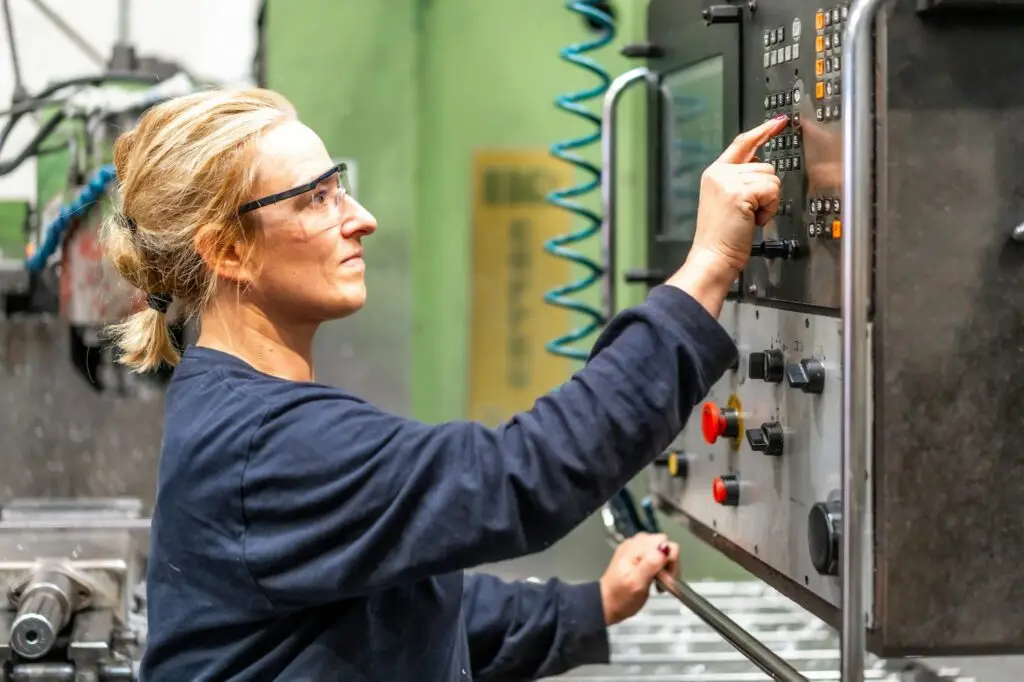
Germany is one of the most evolved countries in terms of industry. Since 1988 Germany, along with Japan and the United States, accounted for as much as 35 percent of the trade of manufactured goods in the world (Van Ark, Pilat, Jorgenson & Lichtenberg, 1993). This was thanks to the growing demand for products that had a significant degree of value. A few years later, companies began to opt for internationalization. German manufacturing multinational companies shifted “from servicing global demand via exports to a strategy of (produce where you sell) FDI expansion in emerging global markets” (Herrigel, 2014).
Industrial Sector and Technology
Most of the industry in Germany is controlled by the State. In other words, the State is the main employer in Germany. Thanks to the government “the wage differential between skilled and unskilled workers has remained remarkably stable” (Koeniger & Leonardi, 2007). Wages are relatively high in the public sector. Therefore, by paying its workers very well “the public sector could have a substantial impact on those in the private sector. Because of this spillover effect, the existence of a public sector wage gap may induce private sector employers to pay higher wages to their employees” (Melly, 2005).
Technology is central to Germany’s development in recent years. Sternberg states that “although Germany’s national economy still enjoys a very high level of technological competitiveness, despite a slight downward trend, little is known about the existence of high-tech regions and the causes of their coming into being” (2004).. It is essential to understand the underlying dynamics of its implementation because the practice and theory of digital and connected manufacturing technologies is highly relevant (Müller, Kiel and Voigt, 2018). In other words, countries need to learn ways to apply technology correctly in order to achieve an optimal level of competitiveness.
In the future, Germany plans to make its industry more effective, optimizing resources for sustainable development. That is why “major industries are contracting with energy service providers to implement energy management practices to improve efficiency” (Kannan & Boie, 2003). Nowadays, companies are being required to follow guidelines as aimed at reducing costs and infrastructurein the form of power grids and electric energy storage, and to accelerate the transition to a fully renewable power sector” (Tafarte, P., Eichhorn, M., & Thrän, D.,2019). Therfore, sustainable development can be achieved .
Conclusion
All industrialized countries have ministries in charge of pursuing technology policies, but only in Germany and France there are special ministries for research conducting explicit technology development (Sternberg, 1996). Germany, specifically, focuses on innovation and that is its advantage: innovation is the main pillar of sustainability. Through innovation the industries are stimulated by the government, so that they can have stronger technological innovation capabilities, a higher degree of market competition and higher human capital investment. (Xiaoling, Qiong & Kerui, 2020). Finally, to find a sustainable future, we consider that it is necessary to plant the seed of innovation in all industries. But ultimately, this is all in the hands of the state.
Using citations is an excellent idea. However, the words from the authors need to be explained to the reader, so that he/she understands why they are being used.
References
Herrigel, G. (2014). Globalization and the German industrial production model. Zeitschrift für ArbeitsmarktForschung. 48.
Kannan, R., & Boie, W. (2003). Energy management practices in SME. case study of a bakery in Germany. Energy Conversion and Management, 44, 945–959
Koeniger, W., & Leonardi, M. (2007). Capital Deepening and Wage Differentials: Germany versus US. Economic Policy, 22(49), 71-116.
Melly, B. (2005). Public-private sector wage differentials in Germany: Evidence from quantile regression. Empirical Economics, 30,505–520
Müller, Julian & Kiel, Daniel & Voigt, Kai-Ingo. (2018). What Drives the Implementation of Industry 4.0? The Role of Opportunities and Challenges in the Context of Sustainability. Sustainability. 10
Sternberg, R. (2004). Technology centres in Germany: Economic justification, effectiveness and impact on high-tech regions. International Journal of Technology Management, 28, 444-469
Sternberg, R. G. (1996). Government R & D expenditure and space: Empirical evidence from five industrialized countries, Research Policy, 25, 5, 741-758,
Tafarte, P., Eichhorn, M., & Thrän, D. (2019). Capacity Expansion Pathways for a Wind and Solar Based Power Supply and the Impact of Advanced Technology. A Case Study for Germany. Energies, 12, 324
Van Ark, B., Pilat, D., Jorgenson, D., & Lichtenberg, F. (1993). Productivity Levels in Germany, Japan, and the United States: Differences and Causes. Brookings Papers on Economic Activity. Microeconomics, 1993(2), 1-69.
Xiaoling, O., Qiong, L & Kerui D. (2020). How does environmental regulation promote technological innovations in the industrial sector? Evidence from Chinese provincial panel data. Energy Policy, Volume 139.