Lina Marcela Bautista Peña
linabautista@usantotomas.edu.co
Pregrado de Negocios Internacionales

Karol Natalia Castiblanco Ariza
karolcastiblanco@usantotomas.edu.co
Pregrado de Negocios Internacionales
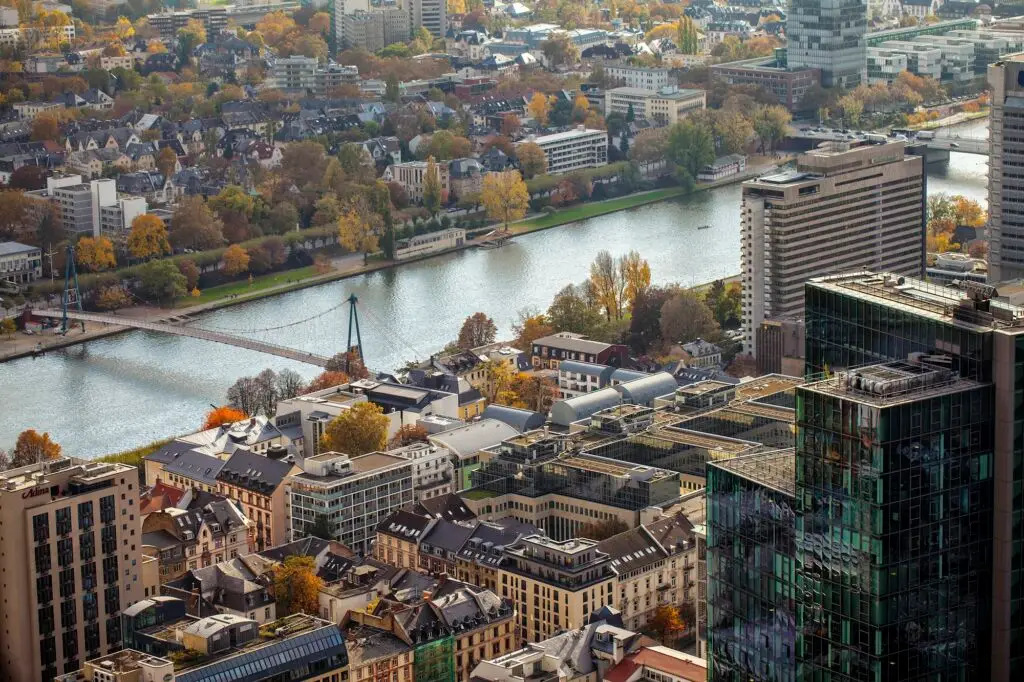
Germany is one of the most advanced industrialized countries in terms of business sustainability. It has complied with most of the 17 Sustainable Development Goals (SDGs) established by the United Nations (OECD, 2018). An essential pillar of Germany’s economy, and what has helped it to reach this magnificent achievement, is the development of technology, which is the focus of this article this. Marcuse, in Hronszky’s article, defined technology as instrumental and as a form of domination that constituted a neutral sphere in society.
For Marcuse, society will achieve well-being in commercial and social aspects through arduous processes. First it had to involve a continuous development of technology in each of the organization’s processes. Second, it had to recognize the need to implement technology in a commercial field, where the members of the organization had knowledge about it. In relation to the need to apply technology, a model capable of synthesizing the idea of monopolizing a new market and satisfying the current market was created: The Neuer Markt Model (Audretsch & Elston, 2006).
In 1997, the Neuer Markt model was implemented in Germany to identify the emergence of a new market, its new needs and desires. In order to analyze whether the model was working, the size of the companies were compared, and the technical standards were evaluated. The growth that was being obtained after the application was then exposed by blind and, after, it was compared with the performance of companies in the country and also with American companies before the 90s. The results showed that German small companies were growing at a higher rate than large companies due to the application of technology, organization and innovation. Audretsch & Elston (2006) concluded that setting policy is not only successful in promoting a new type of company, but in transforming the sources of growth and innovation within the German economy.
However, for Kocher, the economy in Germany took a significant step against the ideal of implementing technology in its processes, so much so that it went from being a dominant economy to an increasingly dependent economy and one in constant competition with others. The country stopped exporting only products and started to focus on capital exports, which could result in Germany’s workplaces being relocated abroad (Kocher, 2007). As Gomez mentions in his Macroeconomics Article, this situation could mean a great advance for Germany to inject capital, because, although the investments are made abroad, the profits would eventually return to the country .
Part of the industries objectives is to find labor, inputs or raw materials abroad at a lower cost. That does not mean that Germany is not attractive for internal investments. On the contrary, foreign companies increasingly create work facilities in Germany or buy German companies to add them to their own culture of labor relations (Kocher, 2007). Germany currently focuses its commercial forces on activities mainly in the third sector and in a medium percentage in the second sector (Reyes, 2015). This country has understood that to achieve a position in the European Union it is necessary to diversify its production, that is why its commercial geography is as follows: Tourism (sector 3) in North of Germany, industry (sector 2) in East and central Germany, and Agro (Sector 1) in the South (Trade Wizar, 2020).
Finally, the importance of the German industry’s innovation and creativity lies – where Pérez & Carrasco emphasize – in the Central European Model. Germany stands out for being traditionally one of the most innovative countries of the European Union. Its innovation policy is characterized by its adaptability, since German institutions often resort to comparing with other innovation systems and learn from foreign institutions, with the aim of continually improving the design of their policy (Bruns, Ohlhorst, Wenzel & Köppel, 2010).
In the current competitive context, for Águila Obra & Meléndez (2010), Germany is characterized by its increasing adaptability to globalization, its rapid technological changes, and ever shorter product life cycles. For Moya & Alemán, such strategy, based on price and innovation, is taking on a fundamental role within this growing competition.
What is blind? Is it an academic process? In the text that is not evident.
Which policy specifically? Is it a policy regarding technology?
Conclusion
It is possible to determine that Germany has managed to identify, in the course of this last decade, the importance of technology applied in organizational processes. Innovation and creativity, additionally, are factors that provide added value to each of the products and services that this country offers at the international level (Casper, Lehrer & Soskice, 1999).
References
Águila Obra, A. R., & Meléndez, A. P. (2010). Factores determinantes de la innovación en empresas de economía social. La importancia de la formación y de la actitud estratégica. CIRIEC-España, revista de economía pública, social y cooperativa, (67), 129-155.
Audretsch, D. B., & Elston, J. A. (2006). Can institutional change impact high-technology firm growth?: evidence from Germany’s Neuer Markt. Journal of Productivity Analysis, 25(1-2), 9-23.
Blind, K. (2001). The impacts of innovations and standards on trade of measurement and testing products: empirical results of Switzerland’s bilateral trade flows with Germany, France and the UK. Information Economics and Policy, 13(4), 439-460.
Bruns, E., Ohlhorst, D., Wenzel, B., & Köppel, J. (2010). Renewable energies in Germany’s electricity market: a biography of the innovation process. Springer Science & Business Media
Casper, S., Lehrer, M., & Soskice, D. (1999). Can high-technology industries prosper in Germany? Institutional frameworks and the evolution of the German software and biotechnology industries. Industry and Innovation, 6(1), 5-24.
Gómez, M. (1995). Macroeconomía. Repositorio Universidad del sur, 4
Hronszky, I. (1998). Algunas observaciones sobre la reciente filosofía de la tecnología en Europa: el caso de Alemania. Teorema: Revista Internacional de Filosofía, 97-110.
Kocher, E. (2007). El Impacto de la Globalización sobre la Estructura de las Relaciones Laborales en Alemania.
Kocher, E. (2007). El Impacto de la Globalización sobre la Estructura de las Relaciones Laborales en Alemania.»la competencia internacional de los costes salariales en la economia alemana», 391
Kocher, E. (2007). El Impacto de la Globalización sobre la Estructura de las Relaciones Laborales en Alemania.»el modelo norteamericano vinene a alemania», 396
Marcus (1998). Some observations on the recent philosophy of technology in Europe: the case of Germany. Theorem: International Journal of Philosophy , 103
Moya, M. M., & Alemán, J. L. M. (2014). ¿Es importante la creatividad en el desarrollo de nuevos productos?. UCJC Business and Society Review (formerly known as Universia Business Review), (44).
OCDE 2018, Organización para la cooperación y el desarrollo económico.
Pérez, M. T. A., & Carrasco, F. R. C. (2012). Los modelos europeos de transferencia de tecnología universidad-empresa. Revista de economía mundial.
Reyes Pintado, J. P. (2015). Exportaciones de productos tradicionales hacia Alemania con sus respectivos documentos de acompañamiento y declaración aduanera bajo el Incoterm Fob.
Trade Wizard (2020). Base de datos wizar Trade. Universidad Santo Tomás Villavicencio.