
Vincent Sanabria Salamanca
vincentsanadria@ustavillavicencio.edu.co
Pregrado de Negocios Internacionales

Nicolás Antonio Orrego Nieto
nicolasorrego@usantotomas.edu.co
Pregrado de Negocios Internacionales
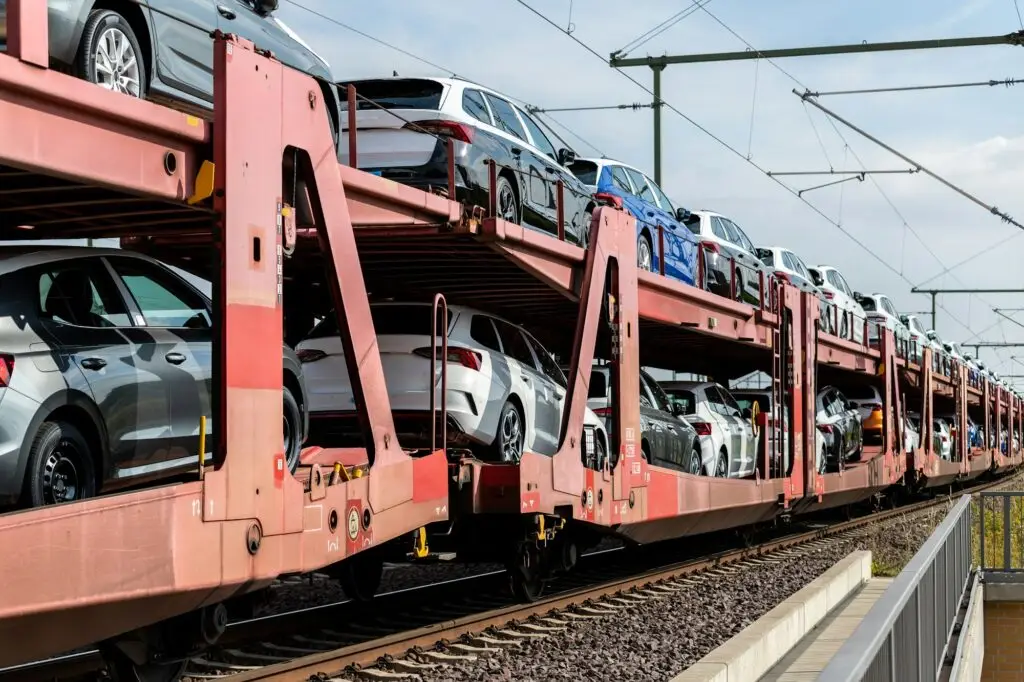
The Automotive Technology industry, despite its centennial character, retains its central importance in contemporary societies because a significant proportion of the gross domestic product in many countries comes from exports, employment and production of cars (Valdenebro, , 2014). BMW and Daimler – two companies characterized by their products “made in Germany” – have adopted in the last decade a “double step”. That is, first, they have switched sales to prefabricated assembly car (CKD, completely knocked down) and, second, the have adopted a more integrated automotive production in prefabricated car assembly plants (Viveros, 2013).
In the 1960s, the United States was the absolute global leader covering 51.4% of world production. Its main competitor, Germany, covered only 14%. Thirty years later, in 1990, six firms controlled 54% of the world production: General Motors, Ford, Toyota, Volkswagen, Chrysler, and Renault (Alvarez, 2013).
The automotive regime was undoubtedly successful and attracted investment. At the beginning of the decade six automotive terminals were installed (Renault, Auto Latin-Ford/VW-, Seve] -licenciataria Fiat and Peugeot, lveco, Scania and Mercedes Benz ), then, GM, Toyota, Chrysler, and Dina joined the market . Meanwhile, Fiat and Peugeot retook control of their operations and Ford and VW returned to separate their business in the country . (López) In the last two years, new projects, investments and firms have continued to arrive and strengthen the automotive sector in Mexico. In total, five new car assemblers have opened and more – two engine plants and three transmissions facilities – are underway. . The largest new investments come from German and Japanese firms (Valdenebro, 2014)
Turntable – which specializes in specific products for different markets – has modern production chains that lead to a highly technological assembly line and promotes cooperation between providers (Cooperation Inter Irma). Turntable leads to change working relationships and improve productive plant structures substantially. (Bensusán, 2017). Their terminals are located in Uruguay but they work mainly with companies based abroad. This group uses natural Uruguayan resources to produces leather seats that have a significant weight in the country’s exports, mainly to Germany (López, 2008)
Technological advances in Germany are common and the reasons why it is a technological power are five: : 1) The country has a record funding for research and development, 2) future threads, 3) the country has a vision of economy, 4) science is valued, 5) there is a strong connection between politics, business, and science. (Z, 2017). The German economic power has become, for four decades, a national symbol, which is envied worldwide. Big German automobile brands, such as Bayerische Motorenwerke (BMW), Daimler Benz (Mercedes), Porsche, the Volkswagen consortium with VW, Audi, Seat, Skoda, and Bugatti are the pillars of the prestigious German economy. They have also become a symbol of the country in times in which a financial and political crisis shakes Europe. Germany never fails to impress due to its surprising stability and low unemployment rates (Bach, 2017)
The automotive industry has the support of the government with its scrapping of old vehicles policy, which makes the automotive industry innovative and environmentally aware, increases domestic demand, and gives rise to other companies, such as mechanical engineering companies, which play a key role in the economy. It is an industry that provides a large percentage of jobs and has become the leading in the export sector because cars are a great market worldwide for their reliability and support (F, 2015).
Thanks to all this technological progress, Germany has submitted plagiarism patents in other countries and it is worth highlighting that the German automotive industry has extended its relationship with assemblers of automobiles in China. That has helped the German product to double (Soriano, 2019). However, an analysis of the dynamics of the modern industrial espionage and the culture of Chinese capitalism, under the lens of economic security. Against this, the German State, in coordination with consulting firms on industrial safety, launched a series of policy briefings to alert different automotive industries about the risk and cost of industrial espionage in China (URVIO, 2020)
The automotive sector is at the forefront today. It is one of the primary industries that generates employment and contributes to a great portion of the German GDP. Its constant innovations help solve technological issues as well as social and environmental problems. It also receives criticism due to certain scandals and problems, such as the case of Volkswagen. (Castillo, 2020). Nonetheless, the Volkswagen Group is driving the electron mobility forward with consistency and commitment. By 2025, the Group plans to build and sell up to 3 million fully electric cars per year, depending on market developments. Then there will be more than 80 new electric models produced by the group, including pure electric vehicles 70 (Corella, 2019)
Conclusion
Germany is a country in Western Europe that is an example to follow in the region; its discipline and technological advances stand out. Its business and primarily technologically and environmental technological advances inculcate its citizens sustainable responsibility (EAE, 2019). For many years, Germany has tried to find a way to instill this. That achievement was not easy, but with the course of the years, its government has implemented tools with ecological criteria that that have been a beacon for the European Union.
German multinationals are looking for a new production model by investing money in geographically determinants countries like Mexico and Uruguay. They are also looking for possibilities to improve their productive linkages with their headquarters, using the advantages offered by each country, as high-quality raw materials.
References
Alvarez, R. B. (2013). Estructura y recomposición de la industria automotriz mundial. Oportunidades y perspectivas para México. Economía Unam, 10(30), 75-92.
Bach, J. (2017). La industria automotriz en Alemania: ¿está perdiendo este sector emblemático su hegemonía a causa del escándalo del diésel?
Valdenebro, A. C. (2014). Explosión de la Industria Automotriz en México: De sus encadenamientos actuales a su potencial transformador. Fundación Friedrich Ebert en México.
Viveros, J. C. (2013). El auge de la industria automotriz en México en el siglo XXI. Reestructuración y catching up. Jorge Carrillo Viveros.
Z, M. (2017). Digitalización, sostenibilidad y urbanismo: claves en el desarrollo de Audi, que se convierte en una compañía digital para redefinir la movilidad urbana. Desarrollo de Audi.