
Gabriela Ávila Zambrano
gabrielaavila@ustavillavo.edu.co
Pregrado Negocios Internacionales
https://scienti.minciencias.gov.co/cvlac/visualizador/generarCurriculoCv.do?cod_rh=0001875325
Laura Valentina Prada Traslaviña
laura.prada@ustavillavo.edu.co
Pregrado Negocios Internacionales
https://scienti.minciencias.gov.co/cvlac/visualizador/generarCurriculoCv.do?cod_rh=0001885551
María Fernanda Rodríguez Rosero
marairodriguezrosero@ustavillavo.edu.co
Pregrado Negocios Internacionales
https://scienti.minciencias.gov.co/cvlac/visualizador/generarCurriculoCv.do?cod_rh=0001885549
First, we will define what globalization is. According to Brandon Levy globalization “is the process of increased interconnectedness among countries” (2012, page 1). Such interconnection refers to the fact that countries relate to each other in aspects such as politics, trade, economy, technology, among others. In more general terms, globalization can be defined as an extensive network of economic, cultural, social and political interconnections and processes which goes beyond national boundaries (Yalcin, 2018).
For Omarah & Dzene, “while the benefits of globalization have been remarkable, some have argued that they have been disproportionately skewed towards rich/industrialized/developed economies, creating greater inequalities and leading to potential conflicts both nationally and internationally” (2019, page 2). Globalization benefits some countries, bringing economic expansion for them but not for others. Author Lascurain argues that on the natural plane, the criticism of globalization has been vital in Latin America. Such a fact is linked to the presence of leftist leaders in countries that have turned their backs on orthodoxy (2016, page 27). Such opinions prove why certain countries are not favored by globalization.
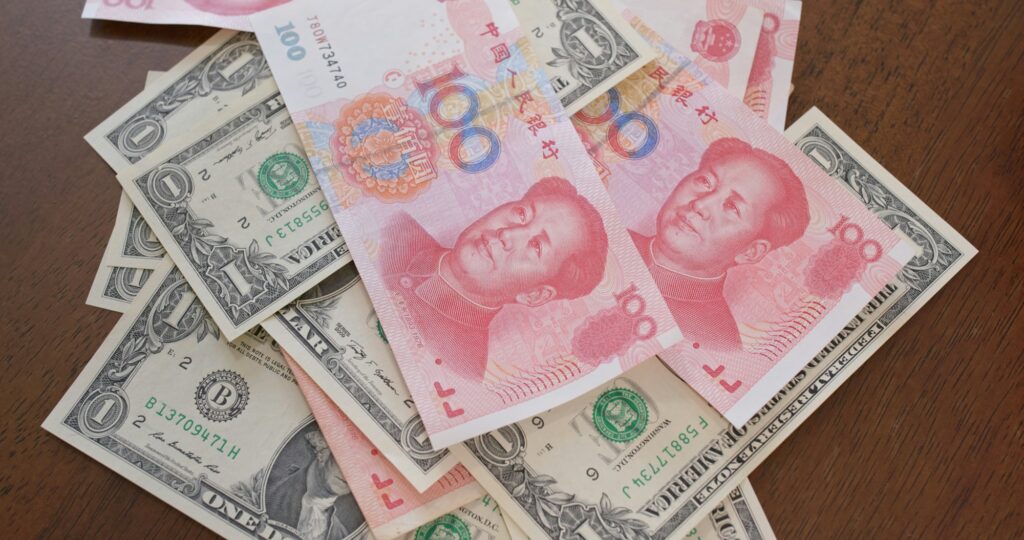
Globalization has caused many changes and two countries are the ones that have taken the most advantage of the benefits brought by it: the United States and China. However, according to Lai (2011), “hen China began its upward development, it automatically became a threat to the United States”. Thanks to the advances that each of the countries experimented, frictions began to arise since both countries had a different way of understanding globalization.
Nevertheless, the two countries are fully aware that maintaining their international relations stable will, at the end, benefit them mutually. According to Rosales (2017), “the USA marked a breaking point in the global economy since it became evident that progress in some regions in one of the countries can indirectly help the other (Wenpu, 1991). The United States believes that friendly relations between the two countries not only serve the interests of the two peoples but also contribute significantly to promoting world peace. Thus, they expand the benefits of their advances to the rest of the world.
It should be added that “a key factor underlying this assessment is that ‘globalization’ is reshaping the global strategic environment. In this new strategic situation, the interests of the United States and China will limit strategic competition between them and compel closer cooperation” (Garrett, 2006). That is why “the two countries should rebalance Sino-U.S. trade by seeking economic and trade cooperation via trade negotiations»” (zhang, 2019).
Based on the above, we agree with Steinbock, who states that it is necessary that “the United States and China achieve a trade agreement. Both agree to phase out additional tariffs, renounce trade threats and establish working groups to defuse other potential friction areas in industrial, intellectual property rights” (2018). Even if there is an increase in the GDP and whether agreements are reached or not, “the United States needs to coordinate more among government, business, and academia; internationally, coalitions of like-minded countries will have the greatest chance of shaping China’s choices on economics, security, technology, and governance” (Medeiros, 2019), demonstrating that the advantages and disadvantages of each country can be used to achieve a common good.
References
Benedict Oramah, R. D. (2019). Globalization and the Recent Trade Wars: Linkages and Lessons. doi:https://doi.org/10.1111/1758-5899.12707
Garrett, B. (2006). US–China Relations in the Era of Globalization and Terror: a framework for analysis. Taylor and Francis Online.
Lai, D. (2011). THE UNITED STATES AND CHINA IN POWER TRANSITION.
Lascurain, M. (2016). CHALLENGES OF ECONOMIC GLOBALIZATION*. Revista de Relaciones Internacionales, Estrategia y Seguridad, 23-49.
doi: https://doi.org/10.18359/ries.2462
Levy, B. (14 de Septiembre de 2012). papers.ssrn.
doi: http://dx.doi.org/10.2139/ssrn.2233648
Medeiros, E. S. (2019). The Changing Fundamentals of US-China Relations. Taylor and Francis Online.
Rosales, O. (2017). The US-China conflict: a new phase of globalization.
Steinbock, D. (2018). U.S.-China Trade War and Its Global Impacts. worldscientific.
Wenpu, Z. (1991). Improving China-United States Relations.
Zhang, M. Y. (2019). Understanding the recent Sino-U.S. trade conflict. Taylor and Francis Online.
Yalcin, Betul. (2018). What is globalization. 10.13140/RG.2.2.16793.93288.